







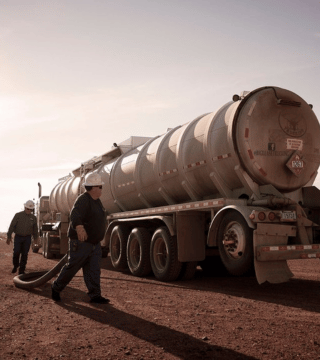
The Bakken remains a mature and highly productive shale region, with Williston Basin oil production holding steady at approximately 1.2 to 1.3 million barrels per day. This sustained output reflects not a surge in new drilling, but rather continued advances in drilling efficiency, longer wellbores and improved completion techniques. Operators today are maintaining a disciplined approach, with North Dakota rig counts generally in the mid-20s, reinforcing a focus on capital efficiency and return on investment rather than rapid expansion. As a result, near-term production is expected to remain relatively stable, with modest fluctuations driven primarily by oil prices and capital allocation decisions across U.S. basins.
Geopolitical developments continue to influence global oil markets. Events involving major producing regions can increase price volatility, which may create periods of stronger pricing and improved royalty revenue. At the same time, these dynamics can influence operator decision-making, particularly around drilling activity and capital deployment within the Bakken.
The shift toward smarter development
A defining characteristic of the Bakken's evolution is a shift from expansion to precision development. One of the most impactful advancements is the move toward longer horizontal laterals. Where earlier development often consisted of 1- to 2-mile laterals, many operators are now drilling 3-mile and, in some cases, 4-mile laterals within a single drilling unit.
These extended wellbores allow operators to access more of the reservoir with fewer surface locations, improving capital efficiency by spreading fixed infrastructure costs across greater production volumes. While these wells require greater technical precision and higher upfront investment, they generally reduce the cost per barrel and enhance overall project economics.
At the same time, operators have refined their approach to well spacing. Earlier development frequently relied on tighter spacing, but experience has shown that wells placed too closely together can interfere with one another and reduce efficiency. In response, operators are increasingly adopting wider spacing strategies, coordinating multi-well pad development and carefully sequencing completions to protect reservoir pressure.
This more measured approach prioritizes total recovery across an entire section rather than maximizing individual well counts, resulting in more stable and longer-lived production profiles.
In addition to longer laterals and optimized spacing, operators are exploring advanced well geometries such as U-shaped, or horseshoe, wells. These designs allow a single wellbore to curve and return within the same drilling unit, increasing reservoir exposure while minimizing additional surface disturbance.
This approach can be particularly useful in irregular lease configurations or partially developed areas, where traditional straight laterals may not fully capture remaining resources. While still less common, these designs reflect the industry's continued push to maximize recovery efficiency from existing acreage.
Long-term outlook: maximizing existing resources
Looking ahead, the Bakken's long-term outlook will depend less on adding new wells and more on improving recovery from existing resources. A significant portion of the oil originally in place remains in the ground, making enhanced recovery techniques a key focus.
Industry-led initiatives, including collaborative research efforts within North Dakota, are advancing methods such as carbon dioxide injection and other data-driven reservoir management techniques.
These efforts aim to increase recovery rates, extend the productive life of wells and generate additional value from developed acreage. The broader trend is clear: rather than relying on rapid expansion, operators are focused on applying technology and operational discipline to improve efficiency and long-term outcomes.
Bottom line for royalty owners
The Bakken transition toward precision development reflects a more mature phase of development, driven by efficiency, discipline and technology. Longer laterals, wider spacing and advanced well designs are allowing operators to capture more value with fewer wells, while enhanced recovery methods may further extend production life.
For royalty owners, this means future income will increasingly be shaped not by the pace of new drilling, but by how effectively existing assets are developed and managed over time. As the region continues to evolve, operational efficiency and long-term resource management are expected to play an increasingly important role in sustaining value for mineral and royalty owners.